917 reviews
 Mon – Thurs: 7:30 AM – 6:00 PM
 5530 Crackersport Rd Allentown, PA 18104
 (610) 395-2514
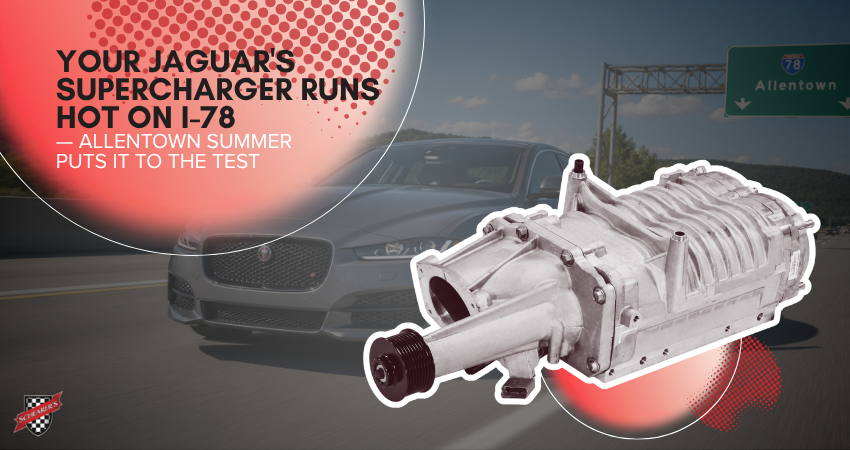
Merge onto I-78 near Allentown on a 90-degree afternoon, put your foot in the F-Type, and the supercharged V8 pulls hard. Then the coolant temperature climbs and the power quietly fades. That’s the supercharger’s own cooling loop crying uncle. Heat is the trigger.
Jaguar’s supercharged 3.0 V6 and 5.0 V8 engines — the F-Type, XF, XJ, and F-Pace — use a separate low-temperature circuit with its own pump, radiator, and charge-air coolers to keep intake air cool. When that second system falls behind in a Lehigh Valley summer, you lose power and risk real engine damage. Noticed your Jaguar heat-soaking around Allentown? Bring it in.
Quick Summary: Key Takeaways
- Two cooling systems, not one: Supercharged Jaguars run a separate low-temp loop with its own pump and radiator just for the charge air.
- Heat plus boost is the test: A hot highway pull is when a weak auxiliary pump or low coolant shows up as lost power.
- Limp mode is a warning: When charge-air temps spike, the car pulls power on purpose to protect the engine.
- A $300 pump saves the engine: Ignore the loop and heat soak can cook gaskets and pistons into a four-figure repair.
- Bosch-level diagnostics: We read the actual charge-air temps instead of chasing the symptom.
What the Supercharger Cooling System Actually Does
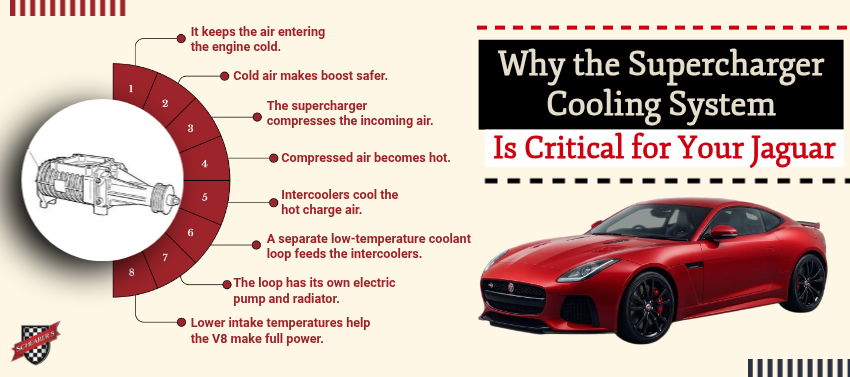
The secondary loop exists to keep the air entering your engine cold. That’s what makes boost safe. A supercharger jams more air into the engine, compressing air heats it, and Jaguar routes that hot charge air through intercoolers fed by a low-temperature coolant circuit with its own electric pump and radiator, separate from the main engine system.
Cold air makes power. Hot air makes trouble. When the loop keeps intake temps down, the V8 makes its rated output. When it can’t, the computer protects the engine and pulls timing.
Why Allentown Summer Heat Overwhelms the Loop
The system falls behind when ambient heat and engine load stack up together. Picture a 90-plus-degree Lehigh Valley afternoon: the little auxiliary pump and its radiator are already fighting a losing battle before you even touch the throttle, and a low coolant level, an aging pump, or a radiator packed with pollen pushes charge-air temps past where the computer stays comfortable. That’s when power drops.
Route 22 traffic is the worst of it. No airflow. High heat. The supercharger still working hard, and the loop simply can’t shed the load.
The Symptoms Jaguar Drivers Notice First
The clearest sign is power that fades on a hot drive and returns once things cool down. You might feel the car go flat after a hard pull. The coolant gauge creeps up. A reduced-power or limp-mode message flashes on the dash, and some owners catch a faint sweet coolant smell or a low-coolant warning in the secondary system.
Pay attention to the pattern. Fine in the morning, weak by afternoon, normal again after it sits. That heat-and-recover cycle is the loop telling you it’s marginal.
Why You Don’t Keep Driving a Hot Supercharged Jaguar
Heat destroys engines, and a supercharged one runs a narrow margin. Let charge-air and coolant temps climb over and over, and you invite detonation, warped components, and blown gaskets on a 5.0 that isn’t cheap to open up. A failing auxiliary pump is a few hundred dollars; a heat-damaged engine is a different conversation entirely.
Summer breakdowns are common for a reason. AAA expected to rescue 7.7 million drivers this summer, and an overheating cooling system is one of the top ways a drive ends on the shoulder of I-78. Pull over if the gauge buries itself. Get it towed rather than pushing on.
How We Diagnose and Fix Jaguar Cooling at Schearer’s
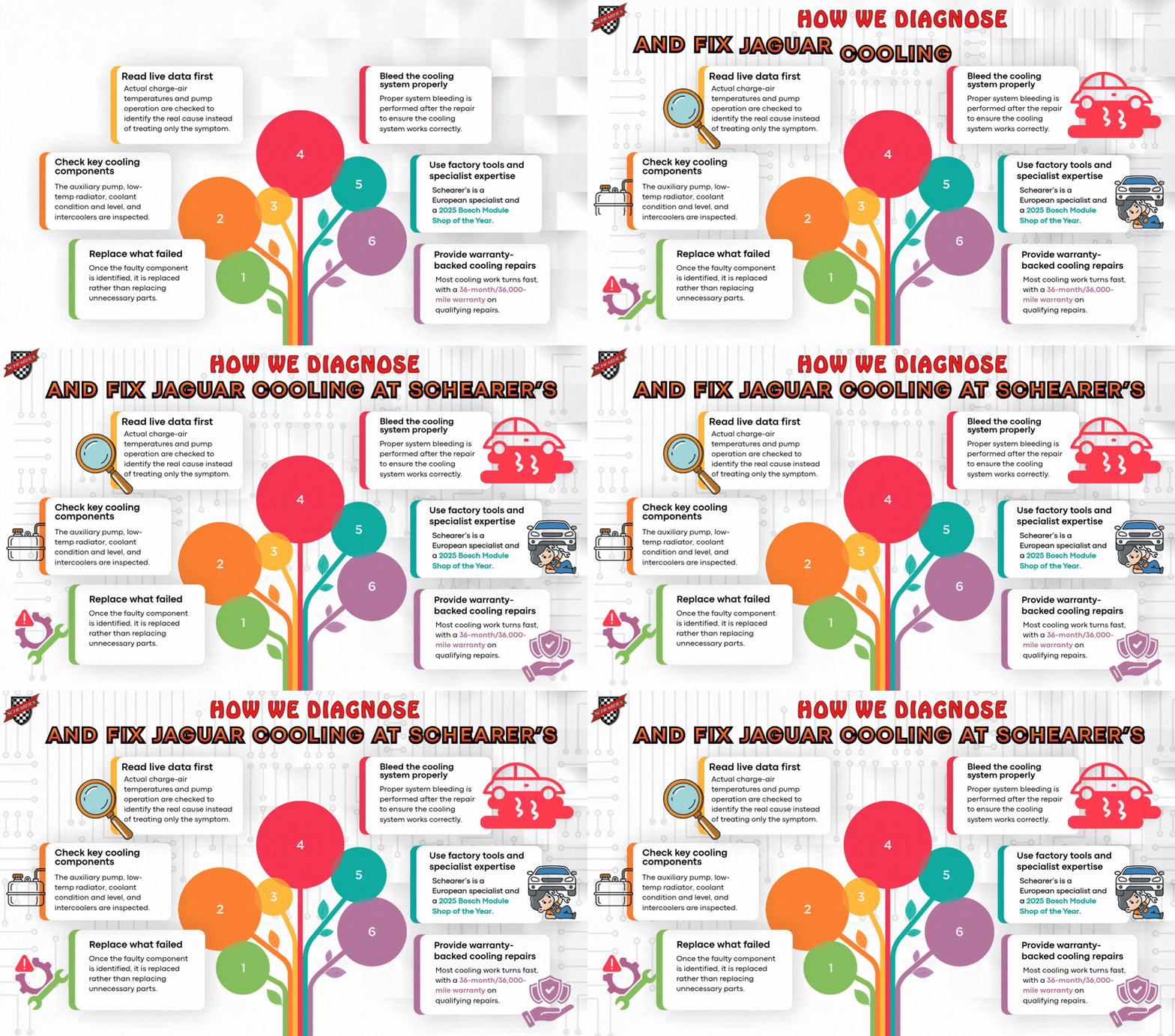
We read the live data first. That includes actual charge-air temperatures and pump operation, so we fix the cause instead of the symptom, and from there we check the auxiliary pump, the low-temp radiator, coolant condition and level, and the intercoolers before replacing what failed and bleeding the system properly. A miscooled Jaguar is often one tired part away from running right.
We’re a European specialist and 2025 Bosch Module Shop of the Year. Most cooling work turns fast, with a 36-month/36,000-mile warranty on qualifying repairs. Straight answers, factory tools, no upsell.
Frequently Asked Questions
Q: Why does my supercharged Jaguar lose power when it gets hot?
A: Because the charge-air cooling loop can’t keep intake temperatures down. When the air feeding the supercharger gets too hot, the computer pulls timing and boost to protect the engine, and you feel that as lost power. It usually returns once things cool, which points to a weak auxiliary pump, low coolant, or a clogged low-temp radiator.
Q: What is the secondary cooling system on a Jaguar F-Type?
A: It’s a separate low-temperature circuit with its own electric pump and radiator that cools the charge air coming off the supercharger. It runs independently of the main engine cooling system, and it’s a common failure point on supercharged F-Type, XF, XJ, and F-Pace models as they age.
Q: Is it safe to drive a Jaguar in limp mode?
A: Only far enough to get it looked at. Limp mode means the car is already protecting itself from heat or a fault, so pushing it risks real engine damage. If it happens on the highway in summer, ease off and schedule service right away.
Q: How often should Jaguar coolant be serviced?
A: Follow the factory interval and have both the main and secondary systems checked, especially before summer. On supercharged models the low-temp loop is easy to overlook, and old or low coolant there is a frequent cause of hot-weather power loss.
Schedule Jaguar Cooling Service Before the Next Heat Wave
Feeling your Jaguar go flat on hot Allentown drives? Get the supercharger cooling loop checked before heat soak damages the engine.
Schearer’s Sales & Service, Inc. — 5530 Crackersport Rd, Allentown, PA 18104
Hours: Monday–Thursday, 7:30 AM – 6:00 PM (Friday–Sunday closed)
Website: schearers.com