917 reviews
 Mon – Thurs: 7:30 AM – 6:00 PM
 5530 Crackersport Rd Allentown, PA 18104
 (610) 395-2514

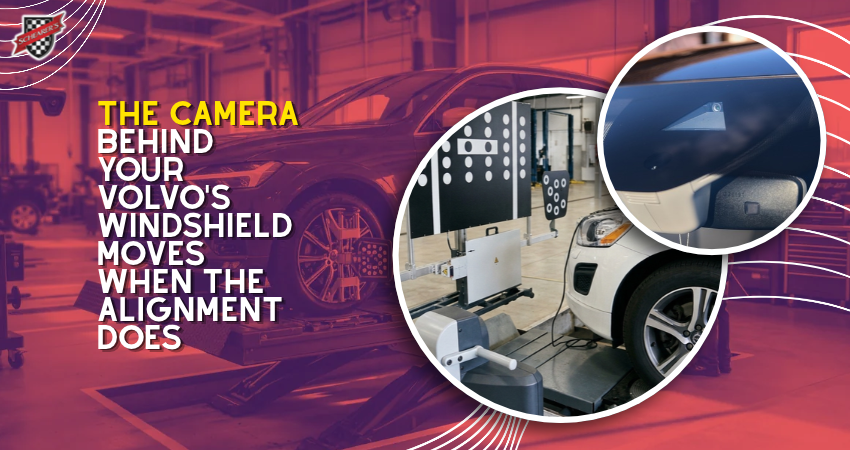
The car arrives after a Lehigh Valley winter of frost heaves and patched pavement, pulling slightly right, wearing the inside edge of a front tire. A four-wheel alignment is the obvious fix. On a late-model Volvo it is only the first half of the job, because the forward-facing camera behind the windshield aims relative to the vehicle’s thrust line, and the alignment just moved it. Allentown drivers see the second line on the invoice and reasonably ask what it is. The answer is worth more than the charge suggests.
What the thrust line has to do with a camera
Every alignment is referenced to the thrust line, the direction the rear axle actually points. Set the front toe to the thrust line and the steering wheel sits straight while the car tracks true. Adjust the rear toe, as most four-wheel alignments do, and the thrust line moves.
The camera and radar that run lane keeping, adaptive cruise and automatic emergency braking are aimed to that same reference. Move the reference and the sensor’s idea of straight ahead is now a fraction of a degree off. A fraction of a degree matters a great deal at a hundred yards.
What a miscalibrated sensor does in practice
It does not throw a fault. That is the part owners find hardest to accept. The system keeps working, keeps displaying its green icon, and simply measures the world from the wrong angle.
Lane keeping starts nudging slightly early on one side. Adaptive cruise picks up the car in the next lane on a curve. Automatic emergency braking reacts to a vehicle that is not quite in your path, or reacts late to one that is. These are the cases where the technology earns its keep: an IIHS study found that automatic braking systems able to recognize pedestrians cut pedestrian crashes by 27 percent. That benefit assumes the camera is pointed where the engineers aimed it.
Static, dynamic, and why the shop matters
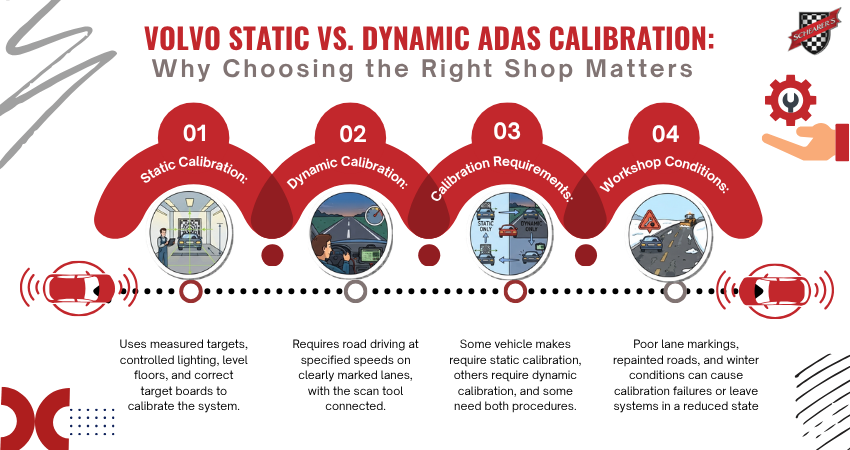
Static calibration puts targets at measured distances and heights in front of the car, on level floor, in controlled light, and the scan tool walks the system through aiming itself. It needs space, a known-flat bay and the correct target boards for the make.
Dynamic calibration is done on the road, at a specified speed, on clearly marked lanes, with the scan tool connected. Some makes want one, some want the other, and several want both in sequence.
Pennsylvania’s patched and repainted lane markings are not an ideal dynamic calibration environment in the middle of winter, and a dynamic procedure run in poor conditions can fail quietly and leave the system in a reduced state the driver never sees. Ask which procedure your car needs and how it will be carried out.
The other jobs that trigger it
Alignment is the one people are surprised by. The rest of the list is longer than most owners expect: windshield replacement, front bumper cover removal or replacement, suspension work that changes ride height, any collision repair to the front structure, mirror replacement on cars with blind spot cameras in the housing, and in some cases a change in tire size.
Brake work by itself does not require it. Suspension work that changes ride height does, because the camera’s angle to the road has moved even though nothing about the camera has changed.
What to ask whoever does the work
Ask whether the shop can calibrate the specific make, because the equipment is make-specific and plenty of alignment racks exist in shops with no targets behind them. Ask whether calibration is included in the alignment price or billed separately. Ask for the printout from both the alignment and the calibration, since both produce one.
A shop that does the alignment and sends you elsewhere for the calibration is not doing anything wrong, but you now have two appointments and a car that is driving in between.
Frequently Asked Questions
Q: Does every car need ADAS calibration after an alignment?
A: No. Cars without forward cameras or radar do not. If your car has lane keeping, adaptive cruise or automatic emergency braking, assume it does and have the shop confirm against the manufacturer’s procedure.
Q: Will a dashboard warning tell me the camera is out of aim?
A: Usually not. A blocked or disconnected sensor sets a fault. A sensor aimed a degree off reports no problem at all, which is why this gets missed.
Q: How long does a static calibration take?
A: Budget an hour or more on top of the alignment, longer on makes that want a static and a dynamic procedure. The setup takes most of it.
Q: Can winter road salt affect the sensors themselves?
A: Salt film and road grime on the radar emblem or the windshield in front of the camera will degrade performance, and that one usually does set a warning. Keeping the front of the car clean is free.
Book the Alignment and the Calibration Together
Booking the alignment and the ADAS work as one job keeps the measurements together and saves a second trip. Schearer‘s also handles Pennsylvania safety and emission inspection, so the timing often works out.
Schearer’s Sales and Service, 5530 Crackersport Rd, Allentown, PA 18104. More at schearers.com.