917 reviews
 Mon – Thurs: 7:30 AM – 6:00 PM
 5530 Crackersport Rd Allentown, PA 18104
 (610) 395-2514
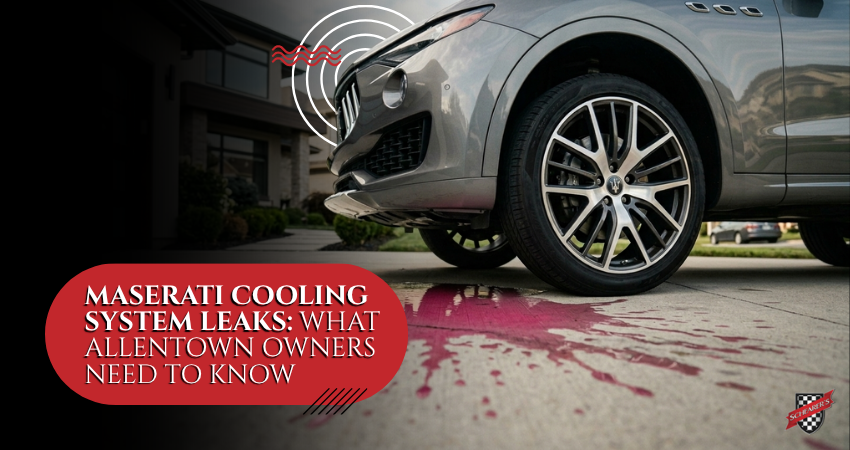
Owning a Maserati means driving one of the most elegant and emotionally compelling performance cars on the road. It also means owning a vehicle whose cooling system demands respect and attention. Maserati’s high-performance engines — from the Ghibli’s turbocharged V6 to the Quattroporte and GranTurismo’s Ferrari-derived V8 — generate significant heat and depend on a properly functioning cooling system to maintain safe operating temperatures. Cooling system leaks are among the more common maintenance concerns on higher-mileage Maserati models, and catching them early is the difference between a routine repair and a catastrophic engine failure. At Schearer’s Sales and Service in Allentown, we have the expertise and tools to diagnose and repair Maserati cooling system issues correctly.
The Maserati Cooling System: More Complex Than It Looks
Maserati cooling systems are engineered for performance-level heat management, which means they’re more complex than what you’d find in a typical European sedan. Most Maserati models use a twin-circuit cooling system with multiple coolant pathways for the engine, transmission oil cooler, and turbocharger intercooler. The system includes plastic coolant expansion tanks, silicone and rubber hoses, an electric auxiliary water pump, a thermostat, and in turbocharged models, additional cooling circuits for the turbochargers themselves. Each of these components can become a leak source, and because the system operates under pressure, even small seeps can quickly develop into significant coolant loss. Italian-spec silicone hoses are generally more durable than standard rubber, but the plastic tanks and hard pipe fittings are known weak points as models age.
Common Leak Points on Maserati Models
Several specific areas account for the majority of cooling system leaks we see on Maserati vehicles at our Allentown shop. The coolant expansion tank is a frequent failure point on Ghibli and Quattroporte models — the plastic becomes brittle with age and develops hairline cracks at fittings and seams that allow slow coolant loss. Hose connections at the thermostat housing are another common leak location, particularly where rubber hoses connect to aluminum or plastic fittings that have corroded or loosened over time. Turbocharger coolant feed and return lines are often overlooked in routine inspections but can develop seeps where they connect to the turbocharger housing. On models with aluminum blocks, the cylinder head gaskets can also fail if the engine has ever experienced an overheating event, producing both external and internal coolant loss that’s harder to detect without proper diagnostics.
Warning Signs of a Cooling System Leak
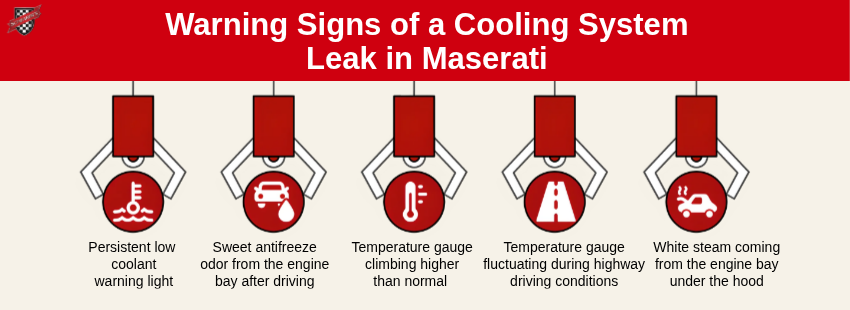
If you’re wondering whether you need Maserati repair, watch for several indicators that point to a developing cooling system leak. A persistent low coolant warning light — especially if it appears intermittently and then clears — is an early sign that coolant is being lost somewhere in the system. A sweet antifreeze odor from the engine bay after driving, with no visible puddle under the car, often indicates a slow weep that evaporates on contact with hot surfaces. The temperature gauge climbing higher than normal, or fluctuating under highway driving conditions, suggests reduced coolant capacity. White steam from the engine bay under the hood is a more urgent sign requiring immediate attention. Any of these symptoms should prompt an inspection before driving the car further, as Maserati engines are expensive to repair after overheating damage.
Professional Cooling System Service at Schearer’s
Our Allentown technicians perform a systematic coolant system inspection that includes a pressure test of the entire circuit, visual inspection of all hoses, tanks, and fittings, and a coolant analysis to check for combustion gas contamination that could indicate internal leakage. We source quality replacement components appropriate for Maserati specifications and perform all repairs with the care these vehicles deserve. If the coolant shows signs of age or contamination, we recommend a complete coolant flush as part of the service to restore proper corrosion inhibition throughout the system.
Schedule Your Maserati Cooling System Inspection in Allentown
Don’t let a minor Maserati cooling system leak become an engine overhaul. At Schearer’s Sales and Service in Allentown, our team has the experience and equipment to keep your Maserati running at its best. Call us at (610) 395-2514 or visit us at 5530 Crackersport Rd, Allentown, PA 18104 to book your appointment today.
Frequently Asked Questions
Q: How often should I have the cooling system checked on my Maserati?
A: We recommend a cooling system inspection annually or at every major service interval, especially on models over five years old or with more than 50,000 miles.
Q: Can I add water to my Maserati coolant in an emergency?
A: In an emergency, distilled water can be used to top off temporarily. However, you should have the system properly flushed and refilled with the correct Maserati-specified coolant as soon as possible.
Q: What’s the cost difference between catching a leak early vs. late?
A: A hose or expansion tank leak caught early is a few hundred dollars. An overheating event that damages the head gasket or warps the block can cost several thousand dollars. Early detection is always worth it.
Q: Is the Maserati cooling system covered under any extended warranty?
A: Coverage depends on your specific warranty and vehicle age. We recommend reviewing your policy and scheduling preventive inspections regardless, since cooling failures can happen quickly.