917 reviews
 Mon – Thurs: 7:30 AM – 6:00 PM
 5530 Crackersport Rd Allentown, PA 18104
 (610) 395-2514
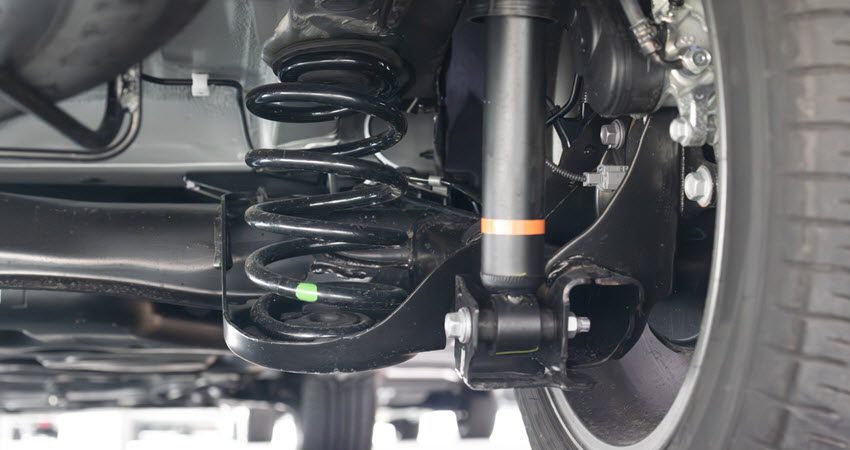
A Porsche that feels loose, vague, or unsettled is a Porsche that isn’t delivering what it was built for. Whether it’s the rear end stepping out more than expected on Route 22, an uncharacteristic float over the rough sections of I-78, a steering wheel that doesn’t communicate the road the way it used to, or a shimmy at highway speed that wasn’t there last year — these aren’t personality quirks you accept. They’re symptoms of suspension components that have worn beyond their design tolerances, and on a vehicle engineered to Porsche’s precision standards, the degradation from worn suspension is felt far more acutely than on less capable vehicles.
Schearer’s Sales & Service, Inc. is Allentown’s trusted European auto repair specialist with over 917 reviews, serving Porsche owners across Allentown, Bethlehem, and the greater Lehigh Valley from our Crackersport Road location. If your Porsche feels unstable, here’s the comprehensive breakdown of what causes suspension degradation — and why Allentown’s specific environment accelerates it.
What Makes Porsche Suspension Unique — and Why Wear Matters More
Porsche’s suspension engineering — whether the 911’s independent multi-link rear with MacPherson front struts, the Cayenne’s air suspension, or the Macan’s double-wishbone front and multi-link rear — is calibrated to deliver a specific combination of ride compliance, steering precision, and cornering stability that defines the Porsche driving experience. Every bushing, ball joint, control arm, and damper in the system contributes to maintaining the wheel geometry that makes a Porsche feel like a Porsche.
The critical difference between a Porsche and a generic vehicle is that Porsche’s suspension is tuned to tight tolerances where small amounts of wear produce noticeable handling changes. A ball joint with 2mm of play that would be imperceptible in a family sedan translates to a vague, unsettled steering feel in a Porsche 911 or Cayman — because the geometry precision the Porsche depends on for its handling character requires near-zero component play throughout the system.
Symptoms of Porsche Suspension Problems Allentown Drivers Notice
Allentown Porsche owners with suspension wear typically describe their experience with language that’s specific to the Porsche driving character:
- Steering that feels vague or disconnected — the Porsche no longer communicates road texture and grip level through the wheel the way it did, replaced by a filtered, imprecise feel
- Rear end instability — the rear of the vehicle feels loose during lane changes on Route 22 or during highway merging, as if the back end is floating independently from the front
- Pulling to one side that alignment adjustment doesn’t fully correct — indicating worn suspension components that allow geometry to shift under load
- Clunking or knocking over Allentown’s road imperfections — worn ball joints, tie rod ends, or control arm bushings making contact under suspension load
- Excessive body roll during cornering — worn sway bar end links or bushings allowing more lateral body movement than the Porsche’s suspension design intends
- Shimmy or vibration at highway speed — wheel bearing play or worn steering linkage transmitting road forces into the cabin at frequencies that produce vibration
- Porsche PSM (Stability Management) intervening more frequently — the stability system activating during maneuvers where it previously didn’t, responding to wheel geometry that no longer matches the system’s design assumptions
- Uneven tire wear — the visible evidence of geometry that’s drifted from spec, with one edge of a tire wearing faster than the other
What Causes Porsche Suspension Wear in Allentown PA
- Pennsylvania’s freeze-thaw road damage is the primary suspension wear accelerator for Allentown Porsche owners. The Lehigh Valley experiences dozens of freeze-thaw cycles each winter, creating the pothole-and-patch road surfaces that characterize Pennsylvania’s spring driving season. Route 22, I-78, and the local surface streets through Allentown and Bethlehem develop significant pothole activity each year — and a Porsche that’s driven at highway speed through a deep pothole experiences an impact load that can displace suspension geometry in a single event.
- Road salt corrosion — Pennsylvania’s aggressive winter road salting creates a corrosive environment for Porsche’s aluminum and steel suspension components. Control arm bushings, ball joint housings, and sway bar end link fittings that are exposed to salt brine accumulate external corrosion that accelerates seal failure and internal wear. Porsche’s aluminum-intensive suspension components — particularly on the 911 and Cayenne platforms — are resistant to corrosion but the steel hardware and rubber components throughout the system are not.
- Age and mileage on rubber components — Porsche’s suspension bushings are made of rubber or polyurethane compounds that harden and crack with age. In the Lehigh Valley’s climate, where summer temperatures push into the 90s and winters drop below freezing, rubber components cycle through significant thermal expansion and contraction that accelerates hardening. A Porsche Cayenne with 80,000 miles in Allentown typically shows more advanced bushing wear than the same vehicle in a more temperate market at the same mileage.
- Air suspension degradation on Cayenne and Panamera — Porsche’s air suspension on the Cayenne, Panamera, and Macan uses air struts, compressors, and height sensors that develop specific failure patterns in Pennsylvania’s climate. Air strut seals contract in cold temperatures, causing height loss and fault codes during winter cold The compressor works overtime to compensate for slow leaks, accelerating motor wear. Allentown Porsche Cayenne owners frequently present with air suspension complaints in early spring after the sustained cold of a Pennsylvania winter.
- High-performance driving demands — Allentown’s proximity to good driving roads through the Pocono Mountains and the Delaware Water Gap means many Lehigh Valley Porsche owners use their vehicles as intended on spirited drives. This performance use places sustained lateral loads on control arm bushings, ball joints, and tie rod ends that exceed the loads from normal highway driving — accelerating wear on components that might last longer in a car driven less enthusiastically.
The Specific Suspension Components Most Commonly Worn on Allentown Porsches
- Control arm bushings — the rubber isolators that attach the control arms to the chassis allow controlled movement while isolating road vibration. When they harden and crack, they allow excessive control arm movement that produces the vague, disconnected steering feel Porsche owners describe. On the 911 and Cayman, worn rear control arm bushings are particularly noticeable — they allow the rear toe to change under load, producing the rear-end instability that’s unsettling at highway speed.
- Ball joints — the pivot points between the control arms and the wheel hub that allow the suspension to move while maintaining wheel position. Worn ball joints develop play that allows the wheel to shift position under cornering and braking loads. On a Porsche, even small ball joint play produces noticeable steering vagueness and, on rear-wheel-drive 911 models, can affect rear axle stability under power.
- Sway bar end links and bushings — the sway bar (anti-roll bar) connects the left and right suspension through its end links to resist body roll during cornering. Worn end links and bushings allow excessive sway bar movement that translates into increased body roll and reduced cornering precision — turning a Porsche’s flat, controlled cornering into something that feels more like a regular car.
- Wheel bearings — Porsche wheel bearings develop play over time that produces a directional hum at highway speed and, in more advanced states of wear, a shimmy felt through the steering column. On rear-wheel-drive Porsches, worn rear wheel bearings affect not just noise and feel but the precise rear axle geometry that contributes to the 911’s famous rear-engined handling balance.
- Porsche PASM (Adaptive Suspension) dampers — on PASM-equipped Cayenne, Panamera, and 911 models, the electronically controlled adaptive dampers use hydraulic actuation to vary damping rates. These dampers develop internal wear and fluid loss over time that reduces their ability to switch between comfort and sport settings effectively, producing a ride that’s either too soft or too firm regardless of the selected mode.
Why Allentown Porsche Owners Shouldn’t Defer Suspension Repairs
- Pennsylvania safety inspection — worn ball joints and tie rod ends with detectable play are Pennsylvania safety inspection rejection items. If your Porsche’s registration is approaching, suspension wear will produce a rejection sticker until the components are replaced.
- Tire destruction — worn suspension components allow wheel geometry to shift under load, producing uneven tire wear that consumes Porsche’s expensive performance tires significantly faster than correct geometry. On a Porsche requiring 20-inch performance tires, the savings from timely suspension repair versus multiple premature tire replacements is substantial.
- PSM and ADAS calibration — Porsche’s stability management and driver assistance systems are calibrated for correct suspension geometry. Severely worn suspension components allow geometry to shift beyond the envelope these systems assume, reducing their effectiveness during emergency maneuvers on Route 22 or I-78 when they’re needed most.
- Compounding damage — a worn control arm bushing that’s allowed to deteriorate further eventually allows the control arm to move enough to stress the ball joint it’s connected to, accelerating ball joint wear. Addressing suspension wear progressively prevents the cascade of related failures that makes deferred suspension repair consistently more expensive than timely service.
How Schearer’s Diagnoses and Repairs Porsche Suspension Issues in Allentown
Our approach starts with a comprehensive lift inspection that physically checks every suspension component for play, cracking, and wear — combined with a four-wheel alignment measurement that identifies which specific geometry parameters have drifted out of specification and gives us a data-driven picture of which components are responsible. We use Porsche-compatible diagnostic equipment to check PASM damper function and air suspension module status on equipped vehicles, alongside the physical inspection.
Once the worn components are identified, we provide a prioritized repair estimate that distinguishes between immediate safety concerns and items that can be monitored. Alignment is always performed after any suspension component replacement — because new bushings and ball joints change the geometry and the previous alignment settings no longer apply.
For Porsche service and suspension repair in Allentown PA and our comprehensive brakes, suspension, and steering service backed by over 917 verified reviews, Schearer’s is the Lehigh Valley’s most trusted Porsche specialist.
Why Choose Schearer’s for Porsche Repair in Allentown PA
Schearer’s Sales & Service, Inc. has earned 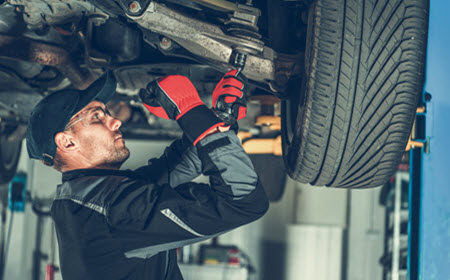 over 917 reviews from Allentown and Lehigh Valley customers who’ve experienced the difference between a shop that genuinely knows European vehicles and one that treats every car the same. Our ASE-certified technicians work on Porsche alongside Audi, BMW, Mercedes, Jaguar, Land Rover, and the full European brand spectrum — with the diagnostic equipment, the platform expertise, and the Pennsylvania safety inspection facility to handle every aspect of Porsche ownership.
Located at 5530 Crackersport Rd in Allentown, we serve Porsche owners across Allentown, Bethlehem, and the greater Lehigh Valley. Open Monday–Thursday 7:30 AM–6:00 PM.
Frequently Asked Questions About Porsche Suspension Issues in Allentown
How do I know if my Porsche’s instability is a suspension issue or a tire problem?
Tire issues typically produce vibration at specific speed ranges and improve after balancing. Suspension wear produces vague steering feel, body roll, and instability that persists regardless of tire condition and doesn’t respond to balancing. A lift inspection at Schearer’s will differentiate between the two definitively before any repair is recommended.
How much does Porsche suspension repair cost in Allentown?
Cost varies significantly by component and model — a sway bar end link replacement is minor, while control arm bushing replacement or air suspension work is more involved. Schearer’s provides a complete itemized estimate after the lift inspection. Call (610) 395-2514 for a consultation.
Will a wheel alignment fix my Porsche’s instability?
Alignment corrects the geometric angles of the wheels but cannot fix mechanical play in worn suspension components. If bushings, ball joints, or bearings have developed play, alignment settings will shift under driving loads regardless of how accurate the static alignment is. Worn components must be replaced before alignment produces a meaningful and lasting correction.
Does Schearer’s service all Porsche models including air suspension-equipped vehicles?
Yes. We service the full Porsche lineup including the 911, Cayman, Boxster, Macan, Cayenne, and Panamera — covering conventional suspension, PASM adaptive damper systems, and full air suspension configurations across all generations.
Schedule Your Porsche Suspension Inspection in Allentown Today
Don’t accept a Porsche that doesn’t handle the way it should. Schearer’s has the expertise, the diagnostic equipment, and the 917-review track record to restore your Porsche’s suspension to the standard it was built to deliver. Call (610) 395-2514 or visit schearers.com!